

Uganda has called for stronger African maritime cooperation, effective implementation of maritime policies and increased investment in inland water transport as the country hosts the 9th General Assembly and Conference of the Association of African Maritime Administrations (AAMA) in Kampala.
Speaking at the opening of the conference, the Minister of Works and Transport, Hon. Fred Byamukama, emphasised the need for African countries to move beyond policy formulation and focus on practical implementation that delivers measurable results.
Held under the theme “From Policy to Practice: Advancing Africa’s Maritime Transformation through Effective Governance, Innovation and Sustainable Blue Economy,”the conference brings together maritime administrators and stakeholders to discuss strategies for strengthening Africa’s maritime sector.
“Our gathering here this week provides a platform that translates our shared priorities into nationally owned, coordinated and measurable actions,” Hon. Byamukama said.
The Minister highlighted Uganda’s historic contribution to the Revised African Maritime Transport Charter, noting that the country became the 15th member state to deposit its instrument of ratification, fulfilling the required legal threshold for the Charter to enter into force.
He noted that although Uganda has no direct ocean coastline, its economic destiny remains closely connected to maritime transport through international trade, transit corridors and seaports in neighbouring countries.
“Our economic destiny is intrinsically connected to the sea,” he said, adding that Uganda’s experience demonstrates that “even a landlocked country without a direct coastline can play a decisive role in the African maritime legal and institutional framework.”
Hon. Byamukama outlined Government’s investments in strengthening inland water transport and multimodal connectivity, including the upgrading of Port Bell and Jinja Port and the development of Bukasa Port on Lake Victoria. These investments are complemented by the rehabilitation of the metre-gauge railway network and development of the Standard Gauge Railway to strengthen regional connectivity.
“Inland waterways are not simply matters of transport convenience. They are essential instruments for economic transformation, national development and our effective participation in the African Continental Free Trade Area,” he emphasised.
The Minister also called for formal recognition of AAMA within the structures of the African Union, arguing that stronger institutional engagement with the African Union Commission would ensure maritime transport priorities are integrated into continental development planning, financing and high-level political dialogue.
He further underscored the need to protect the rights of landlocked countries to access the sea and enjoy freedom of transit, while strengthening regional transport corridors to reduce the cost of doing business and facilitate the movement of goods and services.
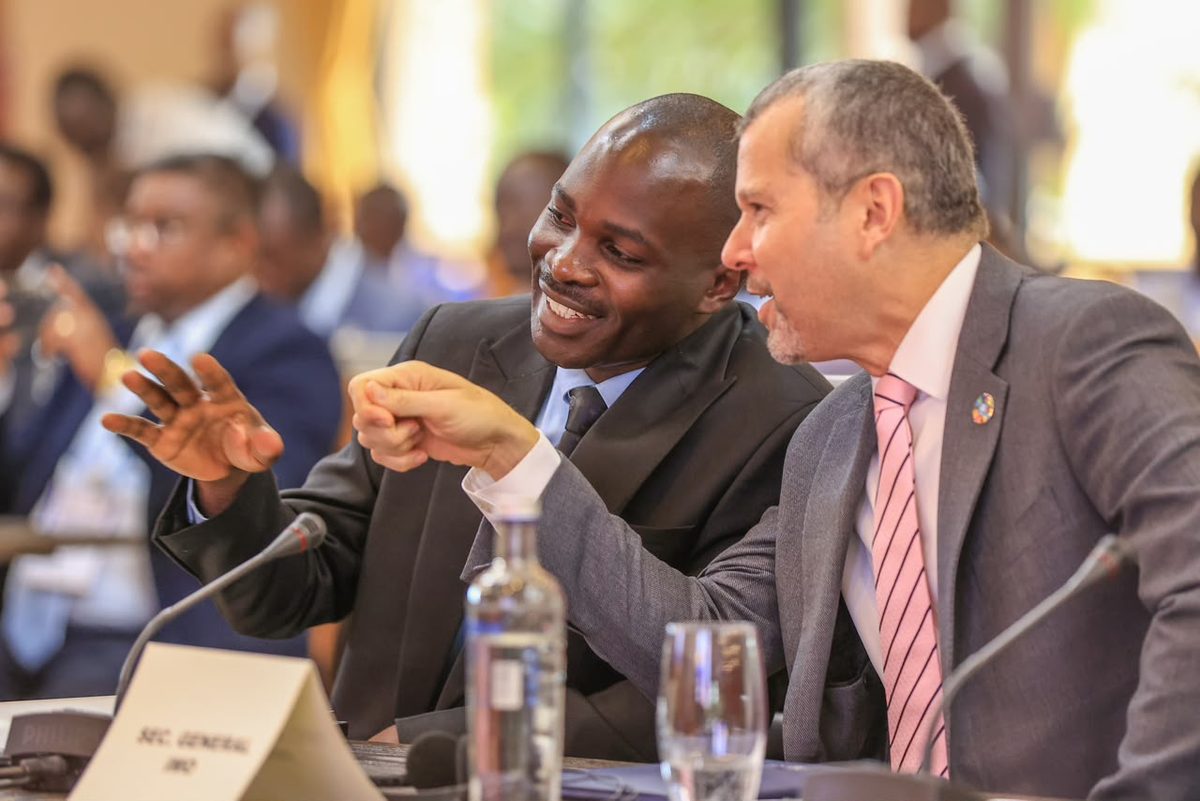
On his part, the Secretary General of the International Maritime Organization (IMO) Mr. Arsenio Dominguez, commended Uganda for hosting the conference and challenged African maritime administrations to focus on translating commitments into practical action.
He said Africa should not merely be considered a partner of the IMO but an important contributor to global maritime decisions, given the continent’s potential and growing role in international shipping.
“The more you develop the maritime sector, the more you attract this younger population into shipping, the more opportunities that you will all have,” he said, highlighting the sector’s potential to create employment, particularly for young people.
The Secretary General singled out Uganda as an example of how landlocked countries can actively participate in the global maritime industry through investment in inland waterways and regional transport connections.
“Uganda is not a landlocked country, but a land-linked country,” he observed, recognising the country’s efforts to strengthen inland water transport and connectivity with neighbouring Kenya and Tanzania.
He also commended AAMA member states for demonstrating progress in implementing maritime commitments, recalling that during his previous engagement with the association two years ago, he had challenged members to move from statements to action.
“Two years ago, I came to you and I asked you for actions, not for statements. And you have been delivering,” he said.
The Secretary General encouraged member states to utilise findings from the IMO Member State Audit Scheme to identify institutional gaps and seek targeted technical assistance, noting that the scheme should be viewed as a tool for strengthening implementation rather than criticising countries.
He further highlighted digitalisation, decarbonisation, inclusion and opportunity, partnerships and effective implementation as important priorities for the sector. He called for greater investment in maritime single windows, alternative fuels, digital certificates and emerging technologies, alongside skills development and increased participation of women and young professionals.
“Our role is not just to set up the rules, but to provide that experience, expertise and assistance in order to make it a reality,” he said.
The conference also comes at a time of growing global maritime uncertainty, with geopolitical developments affecting key international shipping routes, including the Strait of Hormuz, underscoring the importance of resilient maritime networks and international cooperation.
The 9th AAMA General Assembly and Conference provides a platform for African maritime administrations to strengthen institutional partnerships, exchange experiences and agree on practical actions to advance maritime governance, safety, security, innovation and sustainable development.
Uganda’s hosting of the conference underscores its commitment to regional maritime cooperation and the development of efficient and sustainable transport systems that support trade, connectivity and economic transformation across Africa.